
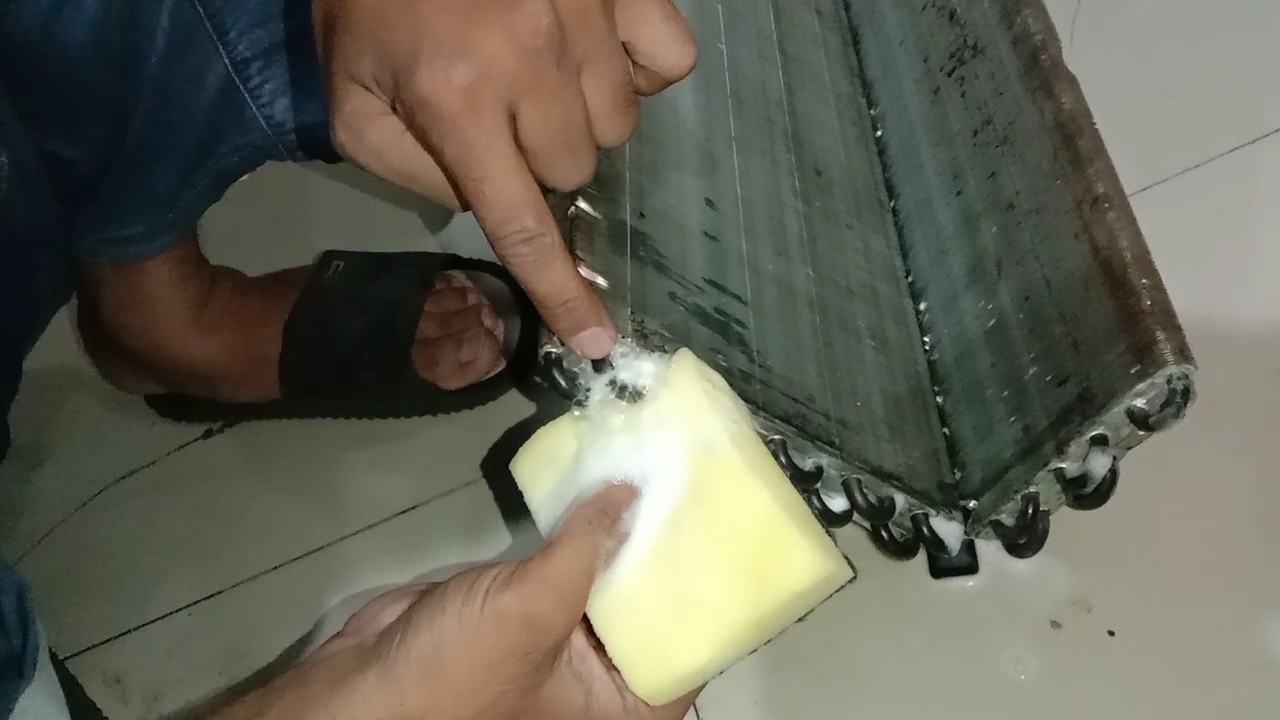
Foam wash is the usual indoor method: a coil foam that dwells, then a controlled rinse with the chassis bagged so the lounge floor does not flood. Chemical wash is for a condenser or evaporator that foam will not shift — construction plaster dust, paint overspray, or years without a proper open.
We cover the furniture, catch the waste, and dry the drain path. Electronics stay masked. A wash is not a gas charge; if the machine still blows warm after the coil is clean, we move to pressures.
Outdoor condensers facing the Margalla wind or a Bahria service lane cake faster. A packed condenser makes the compressor run hot, which is how summer electricity bills jump even when the thermostat is at 26.
Book a wash with the brand and whether the indoor is a high-wall or a cassette. Cassette and concealed ducted units take longer and we schedule them as such.
Questions we get on this job
Will a wash stop water dripping?
If the drip is a blocked drain or a dirty coil starving airflow, yes. If the PVC has no slope, that is a leak repair, not a wash.
Is the chemical safe for inverter fins?
We use coil cleaner meant for aluminium fins, not kitchen acid. Inverter boards are covered before any rinse.
How messy is it?
Indoor units are bagged. You should still clear small objects from under the AC. Outdoor wash needs a wet patch on the pad.
Foam or chemical — who decides?
The technician, once the chassis is open. Light seasonal dirt is foam. Cement or grease is chemical.